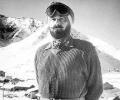
Lieutenant General Harbakhsh Singh, GOC, Western Command, disobeyed the then army chief and took on a superior Pakistani armoured column. The Indian Centurion tanks outgunned the more modern Pakistani Patton tanks in the battle at Khem Karan, that proved the turning point of the 1965 War. Brigadier Gurmeet Kanwal (retd) salutes the Soldiers' General.

'Jaish aided by LeT attacked Parliament knowing mobilisation of Indian military assets would be the consequence.' 'That mobilisation happened, necessitating a military response from Musharraf who moved troops guarding back doors out of Tora Bora, facilitating Osama's escape.'
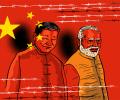
'As China rises and India grows to reclaim their earlier positions on the world stage as two of the largest economies and most important countries, there will indeed be some contention between these two powers.' 'There will also be plenty of space and room for cooperation amongst the two of us.' 'As our economic size increases to match the fact that we are the two most populous nations on earth, it will be all the more important for us to keep the interests of our peoples as well as those of the rest of the world in mind.' 'We shall have to grow together rather than as separate and disparate entities,' points out Ambassador Gautam Bambawale -- who served as India's ambassador to China -- in the 7th annual lecture of the Indian Association of Foreign Affairs Correspondents on March 1, 2019.

'Our biggest problem has been keeping this country together.' 'Nation building is never easy. It is a very difficult task.' 'Even 70 years is not too long a time.'
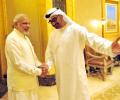
Apart from key bilateral issues, the two leaders also discussed situation in the region, particularly in wake of the increasing threat of terrorism and extremism from various sources including the Islamic State militant group.

As of now, in the case of China's border dispute with India, China is not likely to lose much if it does not resolve the dispute. In fact, the unresolved border dispute has much to offer to China, says Sana Hashmi.

'There is an effort of painting the entire problem as religious one.' 'That Jammu and Kashmir is the way it is because the valley has radicalised.' 'I would be the first person to accept that there is a greater element of radicalism today than it was 25 years ago, but to suggest the entire valley of Kashmir is radicalised and everything you see on the ground is because radical Islam has suddenly taken over is not true.' Omar Abdullah, former J&K chief minister, explains why 'the situation in J&K is very worrisome.'

Did the human drama provoked by the Japanese invasion of Burma and the Indian exodus from Rangoon inspire director Vishal Bhardwaj's forthcoming epic?

The church bells don't toll in Churachandpur any more. The hill district in Manipur has been in mourning for more than a year.

On the title page of the Top Secret Report, Henderson-Brooks quotes the Chinese tactician Sun Tzu: 'Know yourself, know your enemy: A hundred battles, a hundred victories', says Claude Arpi, highlighting where the Indian Army and government failed to counter the Chinese attack in 1962.
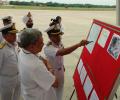
'Other countries go out on a limb to save even a single life.' 'What to talk of civilian accidents and disasters, even our military does not have a priority for Combat Search and Rescue,' says Group Captain P I Muralidharan (retd).

'He deserved to be field marshal because he carried the air force and navy with him in '71. Remember we were fighting on two fronts -- east and west. He stood out.'

As Myanmar refuses to accept that the boat-loads of refugees abandoned at mid-sea are its people, claiming instead that they are from Bangladesh, the plight of the Rohingyas has worsened, reports Prakash Bhandari from Dhaka.

'The thin line is a permanent dilemma with soldiers. You have to appreciate that in that dilemma and chaos there are officers who stand and lead their men.

'It was almost as though there was widespread relief that the defence bureaucracy, and the minister, could find someone willing to shoulder the blame for everything that had gone wrong with the services under Antony's charge -- the poor preparedness of the forces, slow acquisitions caused by indecision, cancellation of contracts and whimsical blacklisting of defence contractors over the tiniest suspicion that they may have paid speed money or kickbacks.'

Glimpses of the final days of the 1965 War, as seen from the diary then defence minister Y B Chavan maintained during the war.

'Many sepoys fought with distinction, winning some of the first Victoria Crosses to be awarded to Indians; and indeed, as in any army fighting under such inhumane conditions -- standing in the freezing sludge, with shrapnel tearing through bodies and being subjected to gas attacks -- some buckled under pressure.'

'India was in no position to wage another war in 1965, having suffered a morale-shattering defeat in 1962. The three services were in the middle of a modernisation and expansion phase and therefore not fully trained or battle-ready.'

'Our policy seems to be to give away part of J&K, even though we are entitled to the entire state.' 'The Congress has done so, and the BJP is following the same policy.' 'No one is applying their mind to the legal position.' 'Kashmir is not a part of Pakistan under its own constitution.'

Three Indian Air Force officers held as Prisoners of War in a jail in Rawalipindi made a heroic escape. They reached as far as the Pak-Afghan border in Pakistan's Wild West -- within sniffing distance of freedom -- only to realise that they had finally met their match. Or so it seemed. The three escapees were never feted for their audacious attempt 41 years and truly deserve official recognition. Why not honour them at least now, says MP Anil Kumar.

No one even comes close to the impact Anil Kumble has had on Indian cricket, when it comes to winning matches and series, say Aakash Chopra and Impact Index.
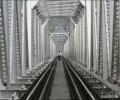
India has planned 14 strategic railway lines in areas bordering China, Pakistan and Nepal, but most of these projects are stuck for want of funds. Anusha Soni reports

The year 2014 is coming to an end. It was the year of conflict, the year of strife. Year 2014 will be remembered for several reasons -- the rise and threat of the Islamic State, the downing of two Malayasia Airlines aircraft and the sudden and effective way of using hastags on social media to generate a buzz about the event. After all, who can forget #theicebucket challenge and the phenomenon it grew into. Read on as we bring you an overview of international news and events of 2014.

Mahesh Rangarajan, director of the historic Nehru Memorial Museum and Library in New Delhi, tells Sheela Bhatt how the first prime minister will always remain relevant, and the efforts being made to keep his legacy alive.

'It is only because we were facing US threats that we were able to successfully develop a nuclear programme of our own.'
